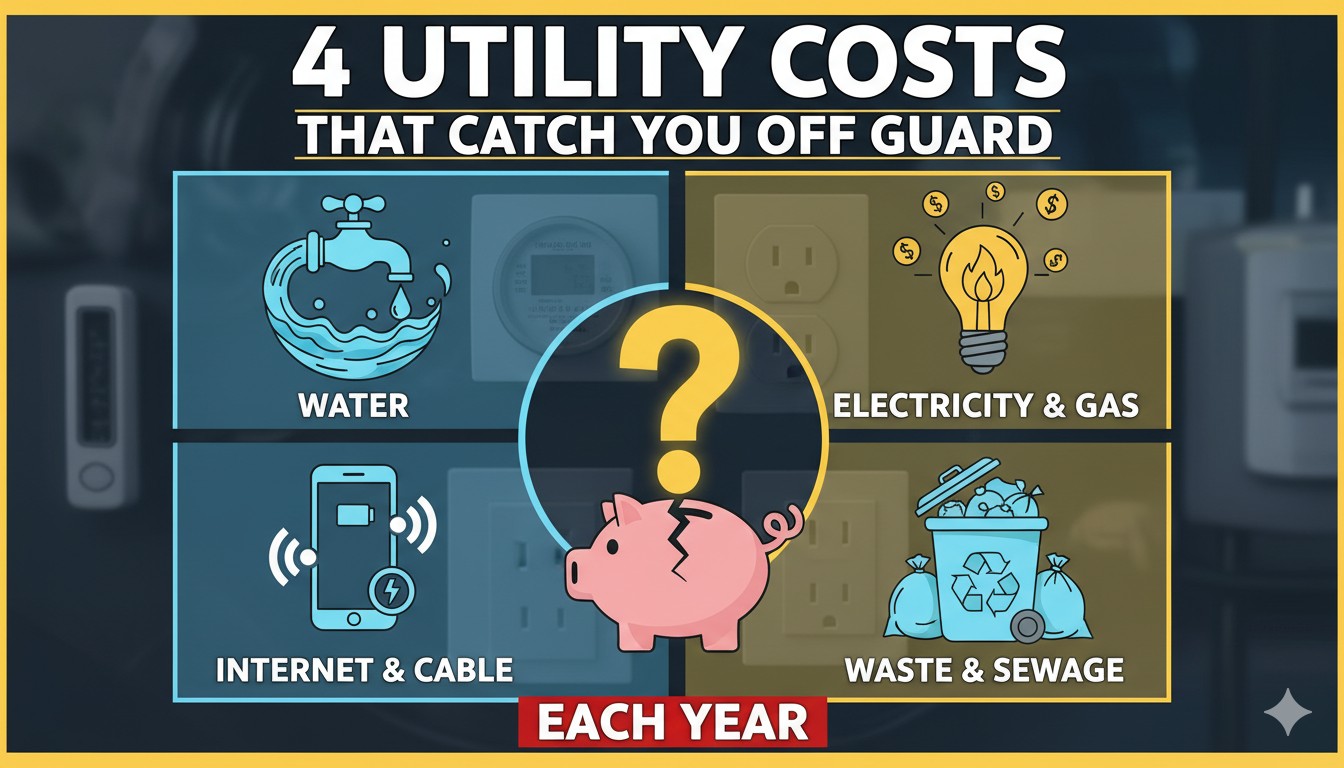
Many American households brace for steady monthly utility payments, yet certain costs surge unexpectedly due to seasonal extremes, billing adjustments, infrastructure-driven rate hikes, and hidden or variable fees. These four categories—seasonal heating and cooling spikes in electricity and gas, annual or true-up water and sewer charges, fluctuating trash and recycling fees, and accumulating surcharges or protection plan add-ons—often lead to bills that double or triple typical amounts, straining budgets when least anticipated.
The Four Utility Costs That Catch Households Off Guard Each Year
American families routinely budget for baseline utility expenses, but real-world fluctuations create shocks that disrupt financial plans. Recent trends show household energy costs rising faster than general inflation, with monthly averages climbing significantly in recent years. National data indicates typical combined utility spending hovers around $350–$610 per month depending on the breakdown, but certain elements deliver annual surprises.
1. Seasonal Spikes in Electricity and Heating/Cooling Bills
Extreme weather drives the most dramatic surprises. Summer cooling demands push air conditioning usage higher, while winter heating needs—whether through electric heat pumps, resistance heaters, or natural gas furnaces—cause sharp increases.
In summer, prolonged heat waves lead to record electricity consumption for cooling. Households in hotter regions face bills that jump 50% or more above off-season levels. Recent summers have seen cooling costs reach historic highs due to sustained high temperatures and rising electricity rates.
Winter brings even steeper shocks for many. Projections indicate average home heating costs around $976 for the season, up over 7% in recent years, with electric heating users seeing increases near 10% or higher in some areas. In colder snaps, electric bills can double or triple as backup heat kicks in or heat pumps work overtime. Natural gas heating sees hikes around 8%, with Midwestern households particularly affected.
These spikes catch families off guard because baseline budgets assume moderate usage. A typical monthly electric bill now averages $140–$160 nationally (based on rates around 17–18 cents per kWh and usage of 850–900 kWh), but seasonal peaks push it far higher. Gas bills average $70–$90 monthly but surge in winter.
2. Water and Sewer True-Up or Infrastructure-Driven Increases
Water and sewer bills often appear stable monthly, but annual reconciliations or phased infrastructure upgrades create unexpected hits.
Many municipalities bill water based on estimated or tiered usage, with sewer charges tied to water consumption. “True-up” bills arrive after meter readings or annual adjustments, catching households with hundreds in back charges if usage was underestimated or leaks went unnoticed.
Infrastructure investments—upgrading aging pipes, treatment plants, and wastewater systems—drive steady rate hikes. Recent years show water/sewer costs rising 4–6% annually in many areas, with some cities implementing multi-year increases totaling 20–50% over time. A family of four might see average monthly water/sewer around $70–$100, but phased hikes or catch-up charges push quarterly or annual totals much higher.
These surprises stem from deferred maintenance and regulatory requirements, often announced subtly in small print or separate notices.
3. Trash, Recycling, and Waste Collection Fee Adjustments
Trash and recycling services frequently fly under the radar until fees jump. Many providers tie charges to municipal contracts, recycling mandates, or landfill costs, leading to annual or mid-year increases.
National averages place trash/recycling at $60–$80 monthly, but hikes of 5–10% occur regularly due to rising disposal fees, labor costs, or expanded recycling programs. Some areas have seen 50%+ jumps in recent cycles for single-family homes.
The surprise factor comes from bundling—trash often appears as a line item on water/sewer bills or separate invoices. Households may not notice gradual creep until a renewal notice arrives with a significantly higher rate. Additional fees for bulky items, extra carts, or missed collections add up unexpectedly.
4. Hidden Fees, Surcharges, and Optional Protection Plans
Utility bills increasingly include layers of fees that accumulate into substantial amounts. These include delivery charges, fuel adjustments, environmental surcharges, late penalties, or “service protection plans” for lines and appliances.
Many customers unknowingly enroll in or inherit protection plans marketed as coverage for repairs (wiring, pipes, or appliances), adding $5–$20 monthly. These often appear buried in statements and prove redundant with existing homeowners insurance.
Junk fees and undisclosed charges affect a significant portion of bills, with some reports indicating unexpected add-ons on gas/electric statements. Late fees can snowball if payments slip during high-usage months.
These elements turn a $300 utility total into $400+ without clear usage changes. Rate structures with tiered pricing—where exceeding thresholds triggers higher per-unit costs—amplify surprises during peak seasons.
Households face these off-guard costs amid broader trends: utility spending now represents a larger share of budgets, with overdue balances rising sharply and disconnection risks increasing. Awareness of seasonal patterns, reviewing bills for unfamiliar charges, and exploring efficiency measures help mitigate the impact, but these four areas remain primary sources of annual financial jolts for millions of families.
Disclaimer: This is for informational purposes only and does not constitute financial, investment, or professional advice. Utility costs vary by location, usage, provider, and individual circumstances.