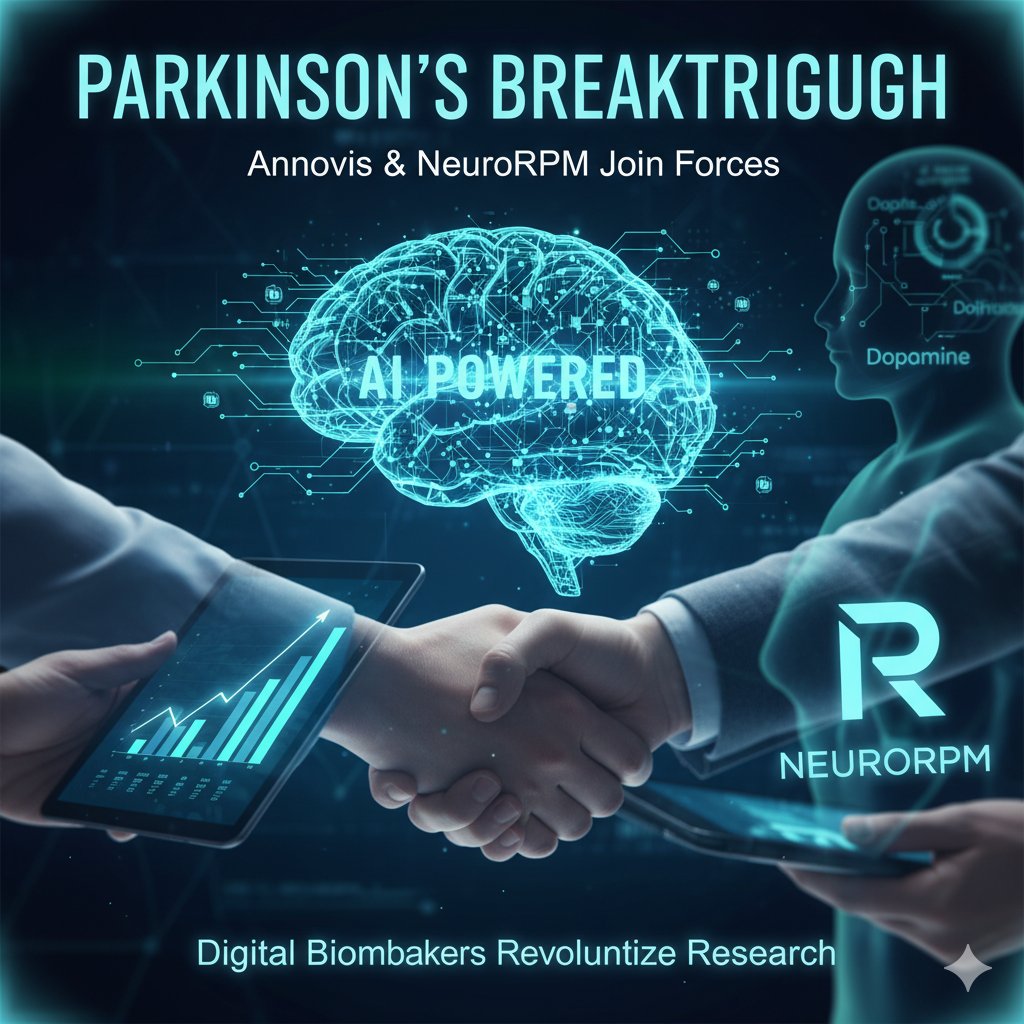
Annovis Bio has teamed up with NeuroRPM to incorporate an FDA-cleared, AI-driven digital monitoring platform into its long-term open-label study of buntanetap in Parkinson’s disease patients. The collaboration deploys continuous, real-time tracking of core motor symptoms like bradykinesia, tremor, and dyskinesia using wearable technology, providing objective digital biomarkers to measure symptom changes and disease progression over the 36-month trial. This move enhances data precision in evaluating buntanetap’s potential long-term effects in PD, building on the company’s ongoing efforts to advance innovative therapies for neurodegenerative conditions.
Strategic Integration of Advanced Digital Monitoring in Parkinson’s Research
Annovis Bio, a clinical-stage biotechnology company focused on developing buntanetap as an oral therapy for neurodegenerative diseases including Parkinson’s disease (PD) and Alzheimer’s disease (AD), has entered a partnership with NeuroRPM to deploy cutting-edge AI-powered digital biomarker technology in its current Parkinson’s study.
The ongoing trial, known as ANVS-25002, is an open-label extension study that recently began enrolling participants across 25 sites in the United States. Designed to run for 36 months, the study administers buntanetap to PD patients to assess long-term safety, tolerability, and potential efficacy in managing both motor and non-motor aspects of the disease. With enrollment actively underway and an aim to include a substantial number of participants, the trial represents a key step in gathering extended real-world evidence on buntanetap’s performance following earlier Phase 2 and Phase 3 investigations.
Buntanetap works by targeting the overproduction of neurotoxic proteins that contribute to neurodegeneration. Previous clinical data have shown promising signals in halting cognitive decline and improving motor functions in PD populations, including subgroups with overlapping amyloid pathology. Biomarker analyses from prior studies have indicated reductions in markers of neuroinflammation, axonal damage, and protein pathology, supporting the drug’s mechanism of action in addressing underlying disease processes rather than just symptomatic relief.
The integration of NeuroRPM’s platform adds a significant layer of objective measurement to this effort. NeuroRPM’s technology, cleared by the FDA as a medical device, leverages wearable devices—specifically the Apple Watch—to passively collect movement data from daily activities. Advanced AI algorithms then analyze this data in real time to quantify three primary motor symptoms of PD: bradykinesia (slowness of movement), tremor, and dyskinesia (involuntary movements often linked to long-term levodopa use).
This approach provides continuous, high-resolution insights that traditional clinical assessments, such as the MDS-UPDRS scale, may not capture with the same frequency or granularity. In clinical trials, these digital biomarkers can serve as sensitive indicators of symptom fluctuation, medication response, and overall disease trajectory. By incorporating this technology, Annovis aims to strengthen the evidence base for buntanetap’s impact, potentially demonstrating clearer patterns of improvement or stabilization in motor function over the extended treatment period.
The partnership aligns with broader industry trends toward digital health tools in neurodegenerative research. Wearable-based monitoring reduces reliance on infrequent clinic visits, minimizes patient burden, and enables remote data collection while maintaining compliance with regulatory standards. For PD patients, who often face mobility challenges, this passive monitoring offers a convenient way to contribute meaningful data without disrupting daily routines.
Annovis has emphasized that this collaboration enhances the study’s ability to monitor disease management comprehensively. The digital biomarkers will complement existing endpoints, including cognitive assessments, motor function scales, and plasma-based biomarkers previously explored in the company’s programs. Earlier findings have shown buntanetap’s capacity to lower levels of proteins like TDP-43, neurofilament light chain (NfL), and glial fibrillary acidic protein (GFAP) in plasma, pointing to neuroprotective effects.
In PD, where motor symptoms dominate but cognitive impairment affects a significant portion of patients over time, combining traditional clinical measures with AI-driven digital tools could provide a more holistic view of therapeutic benefit. The technology’s focus on real-time symptom detection may help identify subtle changes that signal disease modification, a critical goal in PD research where current treatments primarily address symptoms without altering progression.
This initiative also reflects Annovis’ commitment to innovation in trial design. With buntanetap advancing in both PD and AD programs—including a pivotal Phase 3 study in early AD—the addition of digital biomarkers positions the company to generate robust, multifaceted data sets that could support future regulatory discussions and potential expanded indications.
As enrollment continues and the study progresses, the incorporation of NeuroRPM’s platform is expected to yield valuable longitudinal data on how buntanetap influences PD symptom dynamics in a real-world setting. This partnership underscores the evolving role of AI and wearables in accelerating the development of therapies for complex neurological disorders.
Disclaimer: This article is for informational purposes only and does not constitute investment advice, medical advice, or a recommendation to buy or sell any securities. All information is based on publicly available reports and should not be relied upon as the sole basis for decision-making.