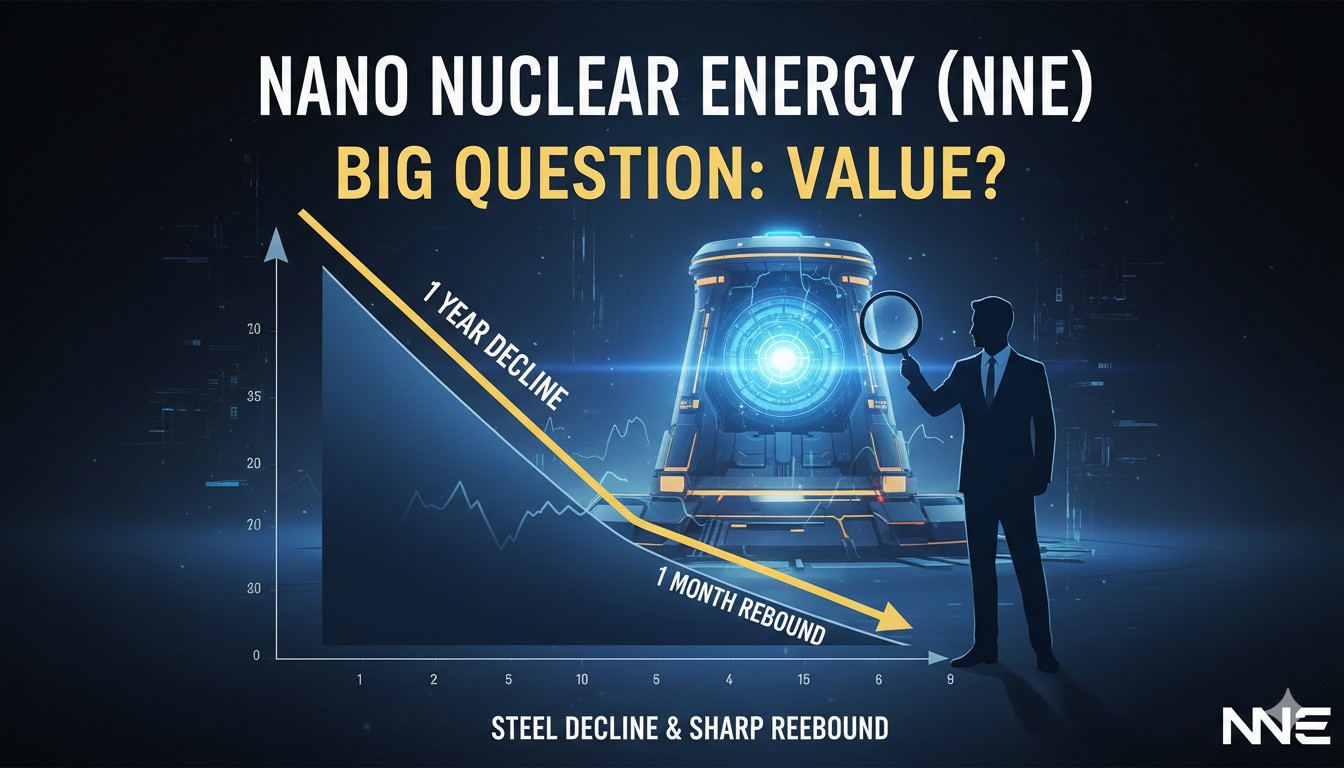
NANO Nuclear Energy’s stock has endured a volatile trajectory, plummeting from a 2025 peak amid sector-wide pressures before staging a modest rebound in early 2026 driven by strategic partnerships; current valuation at approximately 1.8 billion market cap reflects speculative potential in microreactor technology despite zero revenue and ongoing cash burn, positioning it as a high-risk play in the burgeoning nuclear energy revival.
Market Performance Overview NANO Nuclear Energy’s shares have navigated a tumultuous path over the past year, characterized by sharp ascents and descents that mirror broader trends in the alternative energy sector. Starting from a relatively stable base in early 2025, the stock surged over 115 percent by mid-October, fueled by heightened investor enthusiasm for small modular reactors amid growing demands from data centers and industrial applications. This optimism, however, gave way to a precipitous decline as market sentiment shifted, with shares dropping nearly 70 percent from their 52-week high of around 60.87 to a low of 17.26. Factors contributing to this downturn included regulatory uncertainties, competitive pressures from established players, and a general pullback in high-growth tech-adjacent stocks as interest rates fluctuated and economic forecasts tempered expectations for rapid infrastructure spending.
Entering 2026, the stock has shown signs of recovery, posting a 9.39 percent gain over the past month, climbing from levels near 32 to approximately 35. This rebound aligns with positive developments such as memorandums of understanding with international partners, which have reignited interest in the company’s portable microreactor designs. Trading volume has averaged over 2 million shares daily, indicating sustained trader attention, though it remains below peak levels seen during the 2025 rally. The current price hovers around 35, reflecting a partial reclamation of lost ground but still well below the year’s high, underscoring the stock’s sensitivity to news flow and macroeconomic cues.
Financial Health and Key Metrics As a pre-commercial entity incorporated in 2022, NANO Nuclear Energy operates without revenue, relying on capital raises to fund research and development. The company’s latest reported trailing twelve-month earnings per share stand at -1.06, highlighting ongoing operational losses tied to investments in reactor prototypes and fuel facilities. With no trailing or forward price-to-earnings ratio due to negative earnings, valuation hinges on alternative metrics such as price-to-book, which currently sits at about 7.3 times, suggesting investors are pricing in substantial future growth potential despite the absence of profitability.
Market capitalization has stabilized near 1.8 billion, supported by a share float that has expanded through recent offerings but remains manageable for a microcap stock. Enterprise value, adjusted for minimal debt and cash reserves, approximates this figure, with the company holding sufficient liquidity to sustain operations for the next 18-24 months based on current burn rates. Key financial indicators reveal a focus on innovation over immediate monetization: research expenditures dominate the cost structure, while assets primarily consist of intellectual property and early-stage prototypes.
| Metric | Value | Notes |
|---|---|---|
| Market Capitalization | 1.8B | Intraday estimate, reflecting recent price stabilization |
| Enterprise Value | ~1.8B | Minimal net debt; cash position supports R&D runway |
| Price-to-Book Ratio | 7.3x | Elevated compared to industrial peers, indicative of growth premium |
| Beta | N/A | High implied volatility; stock moves amplified by sector news |
| EPS (Trailing) | -1.06 | Losses driven by development costs; no dividends issued |
| Cash Reserves | Moderate | Sufficient for near-term milestones; potential for dilution via raises |
| Debt-to-Equity | Low | Conservative balance sheet avoids leverage risks |
This table illustrates a company in the investment phase, where traditional profitability measures yield to assessments of technological viability and market positioning. Compared to peers like Oklo, which commands a 14.2 billion valuation despite similar pre-revenue status, NANO Nuclear Energy appears undervalued on a relative basis, though its smaller scale and longer timelines to commercialization introduce additional risks.
Technological Portfolio and Growth Drivers At the core of NANO Nuclear Energy’s appeal lies its suite of advanced microreactor technologies, designed for niche applications where traditional power sources fall short. The KRONOS MMR Energy System, a high-temperature gas-cooled reactor, targets reliable baseload power for remote sites, while the LOKI MMR offers compact mobility for specialized deployments such as military or disaster response. Complementing these are the ZEUS solid core battery reactor and ODIN low-pressure salt coolant reactor, both emphasizing safety, efficiency, and scalability. The company is also advancing a fuel processing facility to handle high-assay low-enriched uranium, aiming to create a self-sustaining ecosystem that reduces dependency on external suppliers.
Strategic initiatives have bolstered the narrative around these assets. Recent memorandums of understanding with entities like DS Dansuk in South Korea and Ameresco for U.S. federal and commercial sites signal potential pathways to deployment. These partnerships focus on localizing microreactor production and exploring integrations with existing infrastructure, particularly in high-demand sectors like data centers powered by AI operations. Additionally, the company’s outreach to the U.S. Department of Energy and NASA for lunar surface reactor programs underscores ambitions beyond terrestrial markets, tapping into government-backed innovation funds.
The broader nuclear renaissance provides a tailwind, with policy shifts favoring clean energy alternatives amid climate goals and energy security concerns. Increased federal incentives for advanced reactors, coupled with private sector interest from tech giants seeking carbon-neutral power, could accelerate adoption. However, timelines remain a critical variable: full commercialization of key products like the ZEUS reactor is projected for 2030-2031, leaving a multi-year gap where execution risks—ranging from regulatory approvals to supply chain hurdles—could erode investor confidence.
Risk Factors and Valuation Considerations Valuing NANO Nuclear Energy requires balancing its speculative upside against inherent uncertainties. On the positive side, analyst price targets average around 40-47, implying 15-35 percent upside from current levels, predicated on successful milestone achievements and sector momentum. The stock’s high-beta nature amplifies gains during bullish phases, as evidenced by the 2025 surge, making it attractive for momentum traders. Relative to competitors, its focus on ultra-portable designs differentiates it in underserved markets, potentially commanding premium pricing once operational.
Conversely, the absence of revenue exposes the company to funding dependencies, with potential share dilution a recurring threat. Competitive dynamics intensify, as larger firms like NuScale Power advance their own small modular reactors with established regulatory progress. Macro risks, including shifts in energy policy or economic downturns curbing infrastructure investments, could prolong the recent rebound’s fragility. Volatility metrics show the stock prone to 10-20 percent swings on news, as seen in the 11.4 percent jump following the South Korea MOU announcement.
From a discounted cash flow perspective, assuming moderate adoption rates post-2030 yields a wide valuation range: conservative scenarios peg intrinsic value near 25 per share, while optimistic projections—factoring in rapid market penetration and partnerships—could justify 60-80. The current 7.3x price-to-book suggests the market is embedding a growth narrative, but any delays in prototypes or failed collaborations might compress this multiple toward industrial averages of 3-5x. Investors should monitor upcoming earnings reports, expected around February, for updates on cash burn and development progress, as these will serve as pivotal catalysts.
Peer Comparison and Sector Context Positioning NANO Nuclear Energy within the small modular reactor landscape reveals both opportunities and challenges. Peers like NuScale Power, with a more mature pipeline, trade at higher multiples but face their own commercialization hurdles. Oklo’s lofty 14.2 billion cap reflects aggressive bets on fast-neutron technology, highlighting how narrative-driven valuations can diverge from fundamentals. In contrast, NANO Nuclear Energy’s emphasis on micro-scale portability targets a sub-niche, potentially yielding higher margins in defense and remote power applications.
Sector-wide, nuclear stocks have rebounded modestly in early 2026, buoyed by geopolitical emphases on energy independence and tech-driven demand surges. However, the 2025 decline across the board—triggered by overextended valuations and interest rate sensitivities—serves as a cautionary tale. NANO Nuclear Energy’s rebound, while encouraging, must contend with this backdrop, where sustained momentum depends on tangible progress beyond MOUs.
| Peer | Market Cap | Key Focus | Valuation Multiple (P/B) | Stage |
|---|---|---|---|---|
| NANO Nuclear Energy (NNE) | 1.8B | Microreactors for remote/specialized use | 7.3x | Pre-commercial, prototypes in development |
| Oklo (OKLO) | 14.2B | Fast reactors for grid-scale | ~20x | Regulatory submissions underway |
| NuScale Power (SMR) | ~5B | Small modular reactors for utilities | 8-10x | First deployments targeted for late 2020s |
| TerraPower | Private | Advanced natrium reactors | N/A | Backed by major investors, pilot stages |
This comparison underscores NANO Nuclear Energy’s underdog status, with a lower cap offering asymmetric upside if it captures market share in its targeted segments.
Strategic Outlook and Catalysts Looking ahead, NANO Nuclear Energy’s path to value creation centers on bridging the gap from concept to deployment. Key catalysts include regulatory milestones, such as Nuclear Regulatory Commission approvals for reactor designs, which could validate the technology and attract institutional capital. Expansion of the fuel transportation and consulting arms provides near-term revenue diversification, albeit modest, while international collaborations like the South Korea initiative open doors to Asian markets hungry for clean energy solutions.
Investor sentiment will likely hinge on execution: demonstrating prototype efficacy through testing partnerships could propel shares toward the upper end of analyst targets. Conversely, any setbacks in funding or timelines might revisit the 2025 lows. In a sector poised for growth amid global electrification trends, the company’s agility in microreactor innovation positions it as a potential disruptor, though patience remains essential given the extended horizons.
Disclaimer: This is for informational purposes only and not intended as investment advice. Consult a financial professional before making decisions. All data and opinions are based on publicly available information.