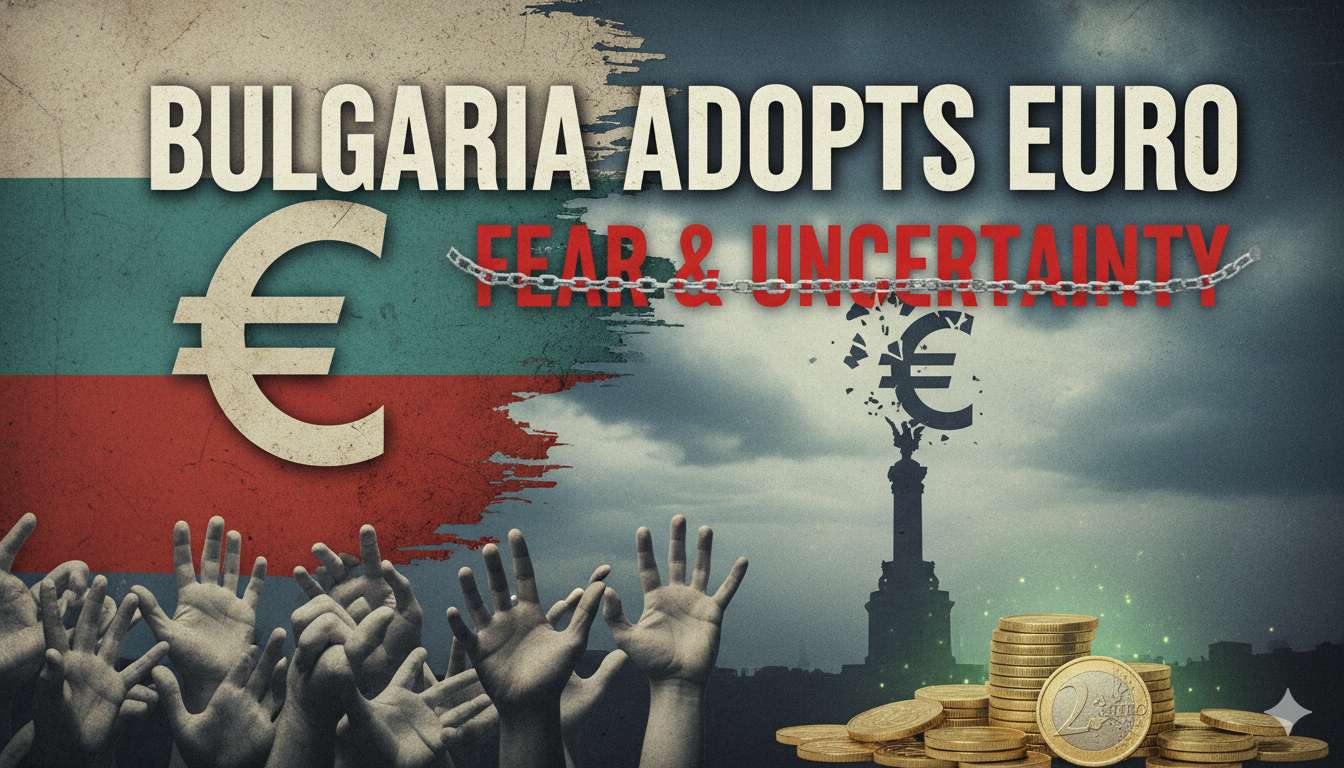
“Bulgaria gears up to adopt the euro on January 1, 2026, marking its entry as the 21st eurozone member. Policymakers anticipate enhanced economic stability and growth, but widespread public apprehension centers on potential price increases, political turbulence, and external disinformation efforts that could exacerbate uncertainties.”
Economic Realities Behind Bulgaria’s Euro Adoption
Bulgaria’s economy has shown resilience with a GDP reaching approximately $127.92 billion in 2025, reflecting a growth rate of around 3% annually.
This positions the nation as a mid-tier player in the European Union, with per capita GDP hovering at $20,426, underscoring gradual progress from post-communist reforms.
The decision to join the eurozone stems from years of alignment with EU criteria, including maintaining a stable exchange rate pegged to the euro since 1997, which has helped curb volatility in the lev currency.
Adopting the euro is expected to eliminate exchange rate risks for businesses, facilitating smoother trade within the bloc that accounts for over 70% of Bulgaria’s exports. Officials project this could attract more foreign direct investment, particularly in sectors like manufacturing and technology, where the country has seen inflows surpassing $3 billion annually in recent years. Lower borrowing costs through access to the European Central Bank’s mechanisms are also anticipated, potentially reducing the government’s debt servicing expenses, which stand at about 20% of GDP.
Inflation remains a critical metric in this transition, with rates dipping to 5.2% in November 2025 from higher peaks earlier in the year.
Projections for the full year average around 3.64%, signaling a cooling trend amid global supply chain stabilizations.
However, the shift to the euro involves mandatory dual pricing for a year, starting from mid-2025, which has already sparked debates over transparency in retail sectors.
Economists argue that while short-term price rounding might occur, historical precedents from other adopters like Croatia suggest minimal long-term inflationary pressure if monitored effectively.
Public sentiment reveals a divided landscape, with polls indicating sharp splits on the benefits.
Many citizens worry that the changeover could trigger unwarranted price hikes in everyday goods, from groceries to utilities, echoing experiences in previous euro adopters where inflation perceptions outpaced actual figures. This anxiety is compounded by the nation’s recent political fragmentation, including multiple elections and coalition governments that have delayed key reforms.
External factors add layers of uncertainty, with reports highlighting campaigns of disinformation allegedly backed by pro-Russian elements aiming to undermine the adoption.
President Rumen Radev’s opposition has fueled narratives that surrendering the lev equates to lost sovereignty, resonating in a country with historical ties to Moscow. Such rhetoric has amplified fears of economic sabotage, especially in a region vulnerable to hybrid threats.
For global investors, Bulgaria’s euro entry could signal stronger EU integration in the Balkans, potentially stabilizing supply chains for U.S. firms operating in Europe. American companies in logistics and energy might benefit from reduced currency risks, while the broader eurozone expansion could influence transatlantic trade dynamics under ongoing agreements. Yet, if domestic unrest escalates, it risks spillover effects on regional markets, affecting commodity prices and investment flows.
Long-term forecasts paint an optimistic picture, with experts predicting market stabilization by mid-2026 and enhanced competitiveness through deeper EU ties.
The International Monetary Fund has noted tangible progress in Bulgaria’s recovery plans, emphasizing reforms in governance and infrastructure that align with eurozone standards.
Nonetheless, the immediate challenge lies in managing public expectations to prevent panic buying or hoarding, which could artificially inflate prices.
Disclaimer: This news report is for informational purposes only and does not constitute financial advice or investment tips. Sources include various economic analyses and reports.