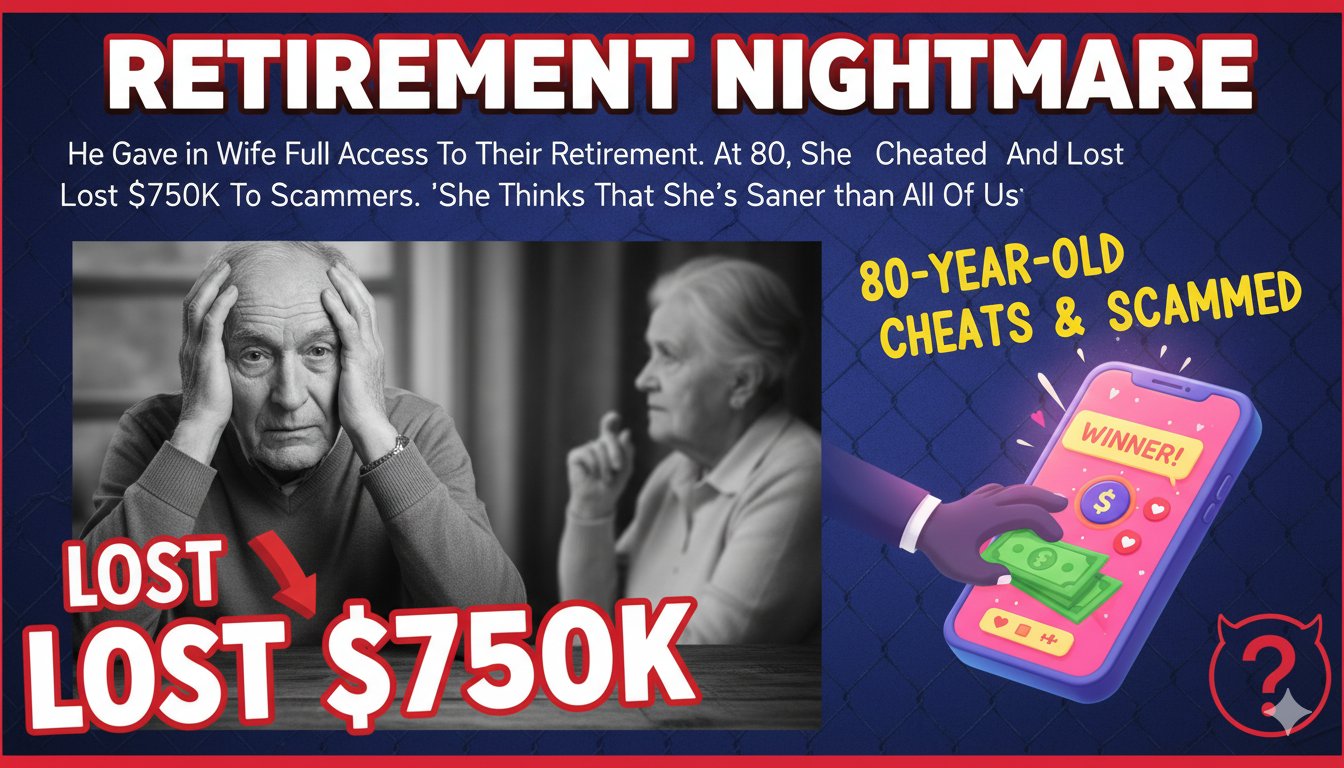
“In a devastating case of elder financial exploitation, an 80-year-old woman, granted full access to her family’s retirement savings by her ailing husband, fell victim to a romance scam, draining $750,000 in just days while maintaining denial and secretive online behaviors, leaving her family grappling with legal and emotional fallout amid rising trends in senior-targeted fraud.”
The Unraveling of a Lifetime’s Savings
A couple in their 80s, after six decades of marriage and diligent saving, faced a financial catastrophe when the husband, battling cancer and fearing his time was limited, transferred control of their substantial retirement portfolio to his wife. Believing she could handle the accounts independently, he aimed to secure her future. Instead, she became entangled in a prolonged online romance scam, wiring the entire $750,000 from one key account to an unknown individual she had never met face-to-face. The transfer happened rapidly, over the course of about a week, highlighting how swiftly scammers can exploit vulnerabilities.
Family members, including the couple’s daughter-in-law, uncovered the loss during routine financial checks. Further investigation revealed this was not a one-off incident. The woman had been targeted by scammers for several years, engaging in deceptive practices such as creating multiple social media profiles under aliases, all featuring the same profile image, to pursue similar virtual relationships nationwide. These actions compounded the damage, leading to additional debts through a reverse loan on a paid-off vehicle and unchecked credit card spending. She even approached her son for funds to cover fabricated bills, raising red flags about her judgment.
Despite interventions from local law enforcement and federal investigators, the woman remains convinced of the scam’s legitimacy, insisting the relationship is genuine and dismissing concerns as overreactions. Family quotes capture the frustration: she views herself as fully competent, even superior in sanity to those around her trying to help. This denial has strained family dynamics, with the husband, described as sharp-minded despite his health issues, possibly aware of earlier red flags but hesitant to act due to embarrassment or loyalty.
Broader Implications for Senior Financial Security
This incident underscores the growing epidemic of romance scams preying on older adults, often leveraging loneliness or cognitive slips to extract life savings. Perpetrators build trust through prolonged online interactions, then fabricate emergencies requiring urgent funds. In this case, the scam’s success was amplified by the wife’s unchecked access to joint assets, lacking safeguards like power of attorney or monitored accounts.
Families in similar situations face tough choices. Petitioning courts for conservatorship emerges as a potential path, involving psychological assessments and possible transfer of financial control to trusted relatives. However, this process can be contentious, risking family rifts if the individual resists. Experts emphasize the need for proactive estate planning, including designating executors and implementing dual-signature requirements on large transactions to prevent unilateral decisions.
Key Statistics on Elder Financial Scams
To contextualize this story, consider the escalating scale of fraud targeting seniors in the US:
| Category | 2024 Reported Losses (60+) | Increase from 2020 | Common Scam Types Contributing |
|---|---|---|---|
| Total Fraud Losses | $2.4 billion | 300% | Investment, romance, impersonation |
| Losses Over $100K | $1.6 billion | Over 500% | Primarily investment and romance scams |
| Estimated True Losses (Accounting for Underreporting) | Up to $81.5 billion | N/A | All fraud types, with tech support and lottery also prominent |
These figures, drawn from federal tracking, reveal a fourfold surge in high-value losses, driven by sophisticated tactics like social media lures and cryptocurrency demands. Older adults over 80 report median losses exceeding $1,600 per incident, far outpacing younger demographics.
Family Strategies and Prevention Measures
Relatives often discover such exploitation too late, as in this scenario where the daughter-in-law and sons pushed for legal protections but met resistance from the husband. Recommended steps include regular financial audits, encouraging open discussions about online activities, and utilizing fraud alerts on accounts. For couples, joint decision-making protocols can mitigate risks, especially when health declines prompt shifts in control.
In response to the drain, the family explored options like halting further asset depletion by advocating for the sons to become estate executors. Yet, without the husband’s full cooperation, progress stalled. This highlights a common barrier: emotional attachments overriding practical safeguards.
Navigating the Aftermath
The remaining joint assets now hang in the balance, with fears that upon the husband’s passing, the wife could exhaust them through continued vulnerabilities. The daughter-in-law voiced concerns about potential inheritance burdens, unwilling to incur debt to support choices she deems reckless. Podcast discussions around the story suggested a “go down swinging” approach via legal intervention, acknowledging the uncertainty of judicial outcomes but stressing the alternative of watching further self-destruction.
This case serves as a stark reminder for families to integrate fraud education into retirement planning, fostering vigilance against evolving threats like AI-enhanced deceptions and cryptocurrency traps.
Disclaimer: This article is for informational purposes only and does not constitute financial advice, legal counsel, or investment recommendations. Readers should consult qualified professionals for personalized guidance regarding finances, estate planning, or fraud prevention.