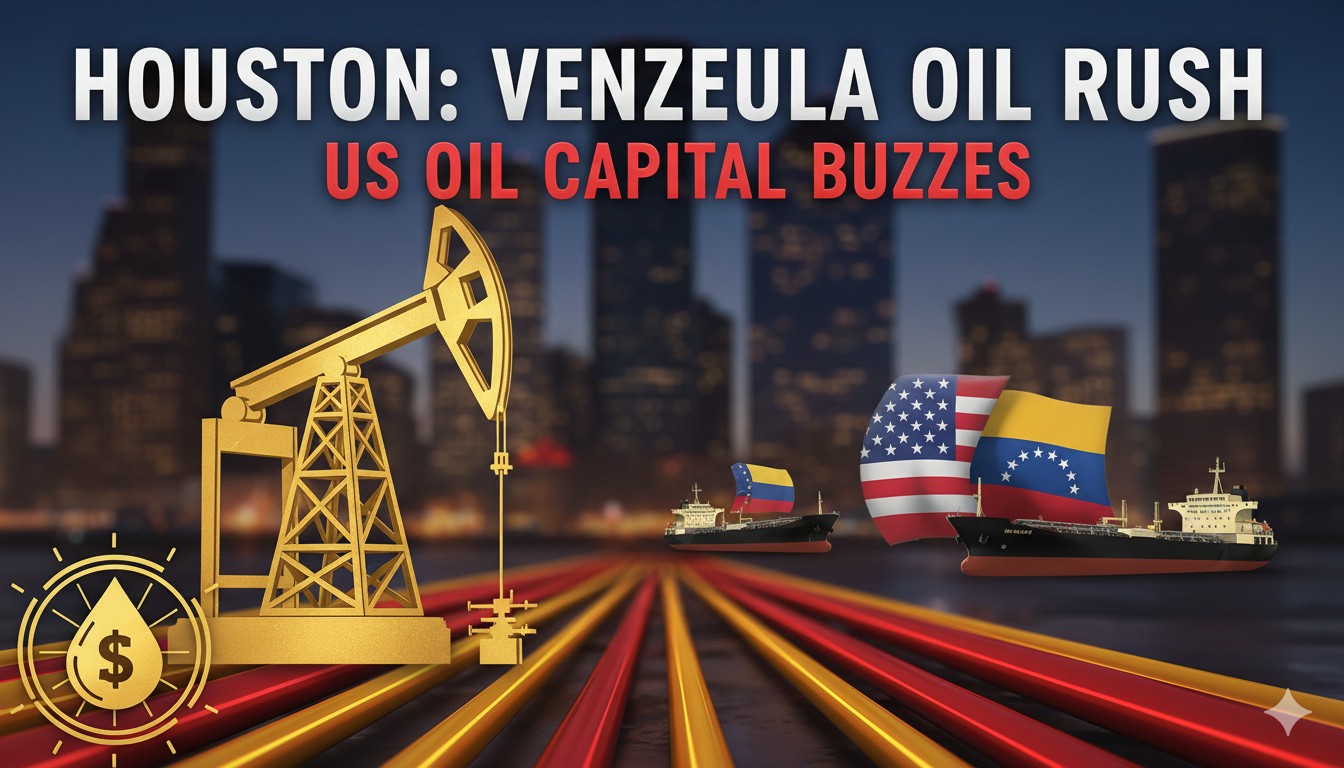
Houston’s energy sector is abuzz with anticipation as U.S. firms position for massive investments in Venezuela’s oil fields following recent political shifts, with companies eyeing billions in projects to revive production amid lingering sanctions and infrastructure hurdles. Key highlights include ambitious terminal refurbishments, service giant comebacks, and production boosts targeting 1.5 million barrels per day, potentially reshaping global crude supplies and benefiting Texas refineries.
In the heart of Texas, Houston’s skyscrapers and energy corridors are alive with deal-making as executives from major oil firms and independents scramble to capitalize on Venezuela’s vast reserves. The world’s largest proven oil deposits, concentrated in the Orinoco Belt, promise high-reward opportunities for those willing to navigate the complexities of a post-crisis landscape. With West Texas Intermediate crude hovering around $61 per barrel, the economic calculus favors bold moves to unlock heavy crude that U.S. Gulf Coast refineries crave for their complex processing capabilities.
Pelorus Terminals, a Houston-based logistics player, is at the forefront with plans to invest between $250 million and $1 billion in marine infrastructure. The strategy involves refurbishing an existing crude terminal, constructing a new one, and converting an older facility for chemical handling. Additional elements include expanded storage tanks, dock overhauls, and reliable power systems to support blending and exporting operations. Executives project a three-to-ten-year timeline, with expected returns exceeding 20 percent, driven by the premium on Venezuelan heavy oil blends that fetch strong prices in Asian and European markets.
Service behemoths are equally eager. Halliburton, which exited Venezuela in 2020, is pursuing licenses to re-enter, with its CEO highlighting the firm’s readiness to deploy advanced drilling and completion technologies. The company participated in high-level discussions, signaling a potential rapid ramp-up in well services to address abandoned fields. Similarly, smaller independents are pitching quick-win projects, such as reviving eastern Venezuelan wells for $70 million annually, aiming to produce 50,000 barrels per day within seven months and generate an $800 million windfall.
Amos Global Energy, another Houston entity, is raising up to $2 billion for upstream ventures, engaging in early-stage talks with investors in both Houston and New York. The focus is on onshore exploration using modern seismic data and horizontal drilling techniques absent from Venezuela’s outdated operations. Chevron, the sole U.S. producer currently licensed there, stands to gain immediately, with executives indicating swift production increases through enhanced recovery methods in joint ventures.
Key Players and Their Strategies
To illustrate the breadth of involvement, here’s a breakdown of prominent firms and their proposed initiatives:
| Company | Investment Focus | Estimated Cost | Projected Outcomes |
|---|---|---|---|
| Pelorus Terminals | Marine terminals, storage, and blending | $250M – $1B | Enhanced export capacity, 20%+ returns |
| Halliburton | Drilling services and well revivals | License-dependent | Quick production uplifts in mature fields |
| Amos Global Energy | Upstream oil projects | Up to $2B | New exploration in Orinoco Belt |
| Chevron | Existing joint ventures expansion | Ongoing | Boost to 1.5M bpd national output |
| Continental Resources | Wildcat exploration and partnerships | Undisclosed | High-risk offshore plays |
| Hilcorp Energy | Infrastructure and midstream | Undisclosed | Support for heavy crude processing |
These efforts align with broader industry optimism, as Denver and Houston host a flurry of meetings with Venezuelan officials. Sources describe a transformed atmosphere, with foreign executives flooding in to discuss power generation, export logistics, and contractual models that prioritize autonomy and cash-based sales.
Challenges in the Rush
Despite the excitement, hurdles abound. U.S. firms must secure Treasury Department waivers to bypass remaining sanctions, which still restrict banking involvement and require case-by-case approvals. Political uncertainties loom, with reliance on local partnerships and state-owned entities for operational support. Legal reforms in Venezuela are progressing, including a new oil law that breaks from past models by allowing private firms greater control over revenues and operations.
Infrastructure decay poses another barrier; decades of underinvestment have left fields, pipelines, and refineries in disrepair, necessitating billions in upfront capital. Smaller investors face amplified risks, demanding ironclad contracts and asset protections. Analysts warn that without clear U.S. oversight on licensing, the rush could falter, though proponents argue the heavy, sticky crude’s appeal to U.S. refineries—optimized for such feeds—will drive persistence.
Economic Ripples for the U.S.
The potential influx of Venezuelan oil could stabilize global supplies, easing pressures on OPEC+ members who are maintaining production pauses amid climbing prices. For Texas, the benefits are multifaceted: Gulf refineries in Houston and Corpus Christi could see feedstock costs drop, improving margins on gasoline and diesel. Job creation in engineering, logistics, and services might add thousands of positions, bolstering the local economy already tied to energy exports.
Venezuela’s current output, rebounding from lows around 900,000 barrels per day, is targeted for an 18 percent increase this year, potentially reaching 1.5 million barrels daily with U.S. tech infusions. This surge would diversify U.S. import sources, reducing reliance on Middle Eastern suppliers and enhancing energy security. Independents are particularly bullish on wildcat opportunities, where advanced tech could uncover untapped reserves in both onshore and offshore basins.
Sector-Wide Implications
Beyond immediate projects, the Venezuela play is reshaping Houston’s deal landscape. Energy conferences and private equity forums are dominated by Venezuelan sessions, with funds allocating war chests for high-yield bonds tied to oil assets. Service providers are stockpiling equipment, from rigs to subsea tools, anticipating a boom in contracts.
Refiners are adjusting strategies, blending Venezuelan crudes to optimize yields amid WTI’s $61 benchmark. This could pressure domestic shale producers if imports flood the market, though experts predict a net positive for integrated majors with downstream assets. The rush underscores Houston’s role as the nerve center, where global energy shifts converge in boardrooms and trading floors.
Disclaimer: This news report provides informational tips based on various sources.