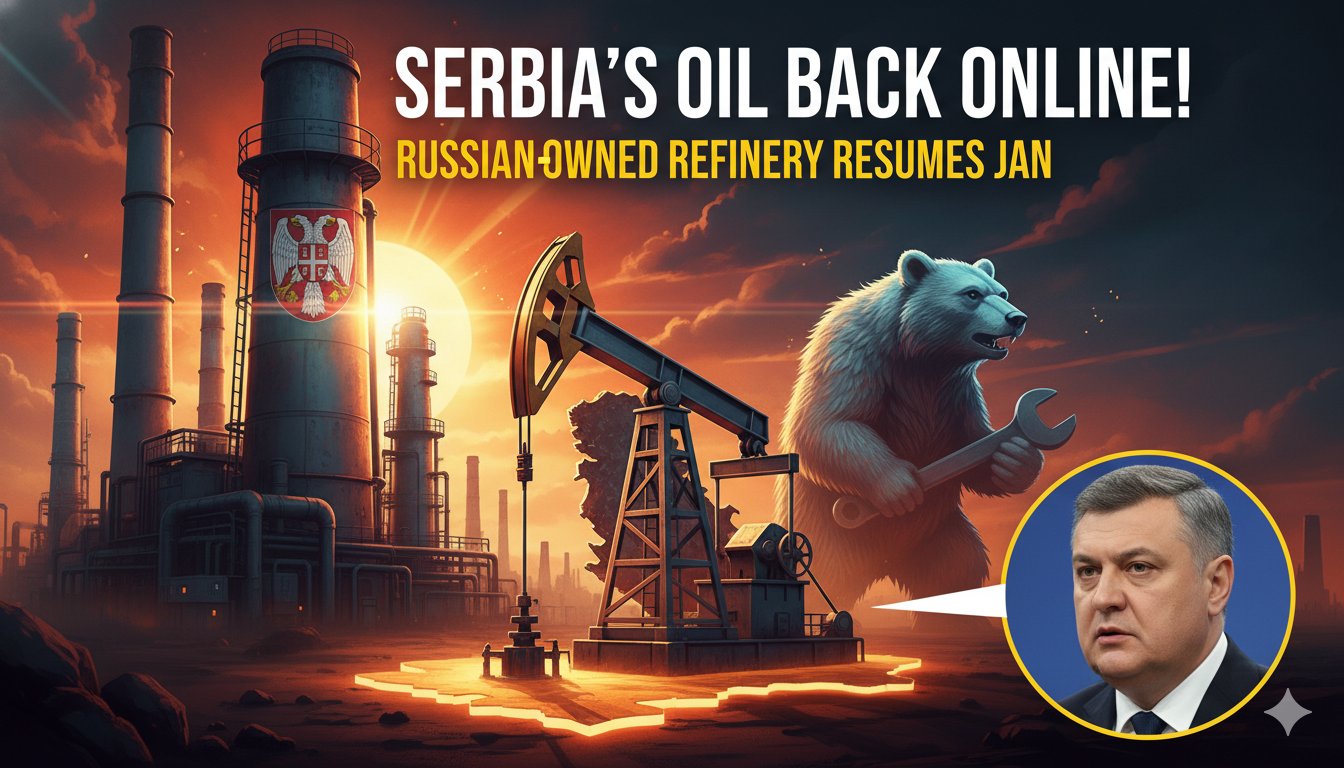
“Serbian President Aleksandar Vucic revealed that the Russian-controlled Naftna Industrija Srbije refinery will restart operations around January 17, following a brief US sanctions suspension. With initial crude oil shipments arriving by January 15, the move addresses Serbia’s energy dependencies, while ownership divestment talks loom by March.”
Operational Restart Timeline The Pancevo refinery, Serbia’s sole major oil processing facility, halted activities for 36 days due to restrictions but now anticipates a swift return to functionality. Deliveries of 85,000 tons of crude are slated for early mid-month, enabling derivative production to commence shortly thereafter. This phased approach ensures minimal disruption to fuel supplies, with full capacity expected within days of reactivation.
Ownership Structure and Geopolitical Dynamics Gazpromneft holds a dominant 44.9% stake, complemented by an 11.3% interest from Gazprom’s investment arm, leaving the Serbian government with 29.9%. The temporary waiver extends operational leeway until late January, providing a buffer for negotiating the sale of Russian holdings by a March deadline. This development underscores ongoing tensions in global energy alliances, particularly as Serbia balances ties with Moscow against Western pressures.
| Stakeholder | Ownership Percentage |
|---|---|
| Gazpromneft | 44.9% |
| Gazprom Investment Division | 11.3% |
| Serbian Government | 29.9% |
| Other Shareholders | 13.9% |
Economic Ramifications for Serbia The refinery’s downtime strained domestic fuel availability, contributing to elevated import costs and logistical challenges. Resumption could stabilize local gasoline and diesel prices, which have fluctuated amid broader European energy volatility. Serbia’s heavy reliance on Russian natural gas persists, with secured supplies through March bolstering short-term economic resilience. However, long-term divestment could attract new investors, potentially diversifying energy sources and reducing vulnerability to international sanctions.
Market Reactions and Energy Context NIS shares on the Belgrade Stock Exchange dipped recently, trading around 705 Serbian dinars with a 5% decline in the latest session, reflecting investor caution over sanction uncertainties. Broader crude markets show WTI hovering near $57 per barrel and Brent at approximately $61, influenced by global supply concerns. For US observers, this highlights the ripple effects of sanctions on allied economies, possibly impacting transatlantic energy trade flows.
Strategic Implications Beyond immediate operations, the episode spotlights Serbia’s pivotal role in European energy corridors. Pipeline operators in neighboring regions, including Croatia, stand ready to facilitate crude transports, enhancing regional connectivity. As divestment progresses, potential buyers from non-Russian entities could reshape the Balkan energy landscape, aligning more closely with EU diversification goals while maintaining affordable fuel access for consumers.
Disclaimer: This news report is provided for informational purposes only and does not constitute financial advice or investment recommendations. All information is based on available sources and is subject to change without notice.