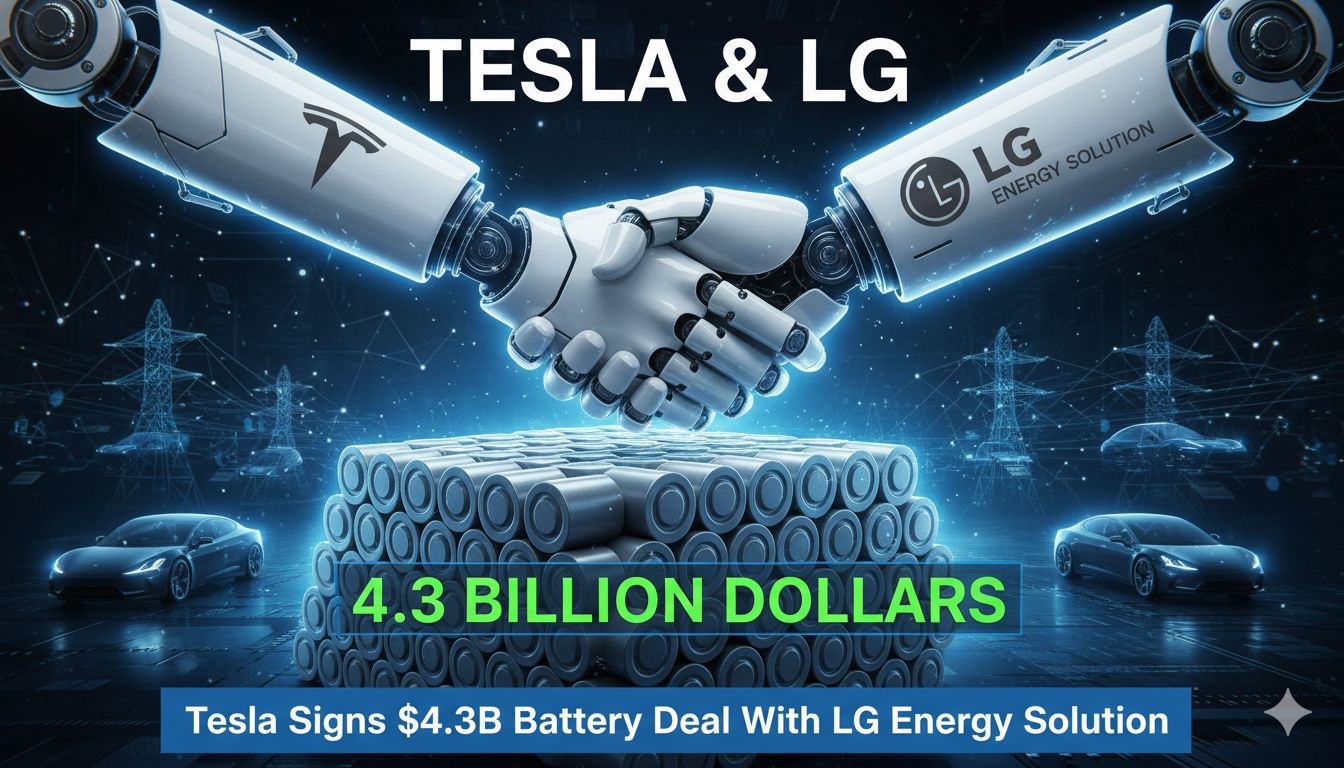
Tesla has finalized a major $4.3 billion supply agreement with LG Energy Solution to source U.S.-manufactured lithium iron phosphate (LFP) batteries exclusively for its energy storage systems. The deal, spanning from August 2027 to July 2030, supports production at LG’s Michigan facility and marks a strategic shift to bolster domestic supply chains while reducing dependence on Chinese imports amid ongoing tariffs. This partnership aims to accelerate growth in Tesla’s energy division, particularly for Megapack deployments, amid surging demand for grid-scale storage solutions.
Tesla Bolsters Energy Storage Supply Chain with Landmark LG Energy Deal
Tesla’s energy business continues its rapid expansion as the company secures a critical long-term battery supply agreement valued at $4.3 billion with South Korea’s LG Energy Solution. This pact focuses on lithium iron phosphate (LFP) prismatic battery cells produced entirely in the United States, targeting Tesla’s stationary energy storage products rather than its electric vehicle lineup.
The agreement, initially reported in mid-2025 and recently confirmed through U.S. government channels including the Department of the Interior, underscores a deliberate move toward greater supply chain resilience. Deliveries are scheduled to begin in August 2027 and run through the end of July 2030, providing Tesla with a steady stream of domestically sourced cells over the three-year core term. Industry insights indicate the contract includes provisions for potential extensions, possibly up to seven additional years, along with options to scale volumes based on demand.
Central to the deal is the establishment and utilization of a dedicated LFP prismatic battery cell manufacturing facility in Lansing, Michigan. This site, part of LG Energy Solution’s expanding North American footprint, will produce the cells powering Tesla’s Megapack 3 energy storage systems assembled in Houston, Texas. By localizing production, Tesla addresses vulnerabilities exposed by geopolitical tensions and trade policies, including tariffs on Chinese-sourced components that have previously constrained energy storage margins and deployment timelines.
LFP chemistry has become increasingly vital for Tesla’s energy segment due to its advantages in cost, safety, and longevity compared to nickel-based alternatives. These batteries excel in stationary applications where high cycle life and thermal stability outweigh the need for maximum energy density. Tesla has progressively incorporated more LFP cells across its portfolio, particularly in utility-scale projects, to meet the explosive growth in renewable energy integration and grid stabilization needs.
Key Deal Details
Contract Value : $4.3 billion
Battery Type : Lithium Iron Phosphate (LFP) prismatic cells
Primary Application : Tesla Megapack and other energy storage systems
Production Location : Lansing, Michigan (LG Energy Solution facility)
Supply Period : August 2027 – July 2030 (with potential extensions)
Strategic Focus : U.S.-made cells to qualify for domestic incentives and reduce import risks
This partnership aligns with broader U.S. efforts to strengthen energy security and onshore critical manufacturing. Highlighted during recent Indo-Pacific energy discussions, the collaboration exemplifies cooperation between American innovators and allied suppliers to build resilient supply networks for clean energy infrastructure.
Tesla’s energy division has shown robust momentum, with deployments surging in recent quarters driven by utility contracts, commercial projects, and virtual power plant initiatives. Megapack installations support grid reliability in regions facing extreme weather, renewable intermittency, and peak demand pressures. Securing reliable, tariff-resilient battery supplies positions Tesla to capture more of this high-growth market, where competition from both established players and emerging entrants intensifies.
For LG Energy Solution, the deal represents a significant win in the competitive LFP space, traditionally dominated by Chinese manufacturers. Producing in the U.S. allows LG to leverage incentives under domestic content rules and positions the company to supply other North American customers seeking localized sourcing.
The agreement also reflects Tesla’s evolving sourcing strategy. While the company maintains relationships with multiple global suppliers, this move diversifies away from heavy reliance on certain overseas sources for energy products. It complements ongoing investments in in-house battery production and other partnerships, creating a more balanced ecosystem for scaling energy storage at pace.
As grid-scale storage becomes indispensable for the energy transition, deals like this accelerate the path to terawatt-hour-level deployments. Tesla’s ability to ramp Megapack production hinges on consistent cell availability, and this $4.3 billion commitment provides a foundational pillar for sustained growth in the sector.
Disclaimer : This is a news report based on publicly available information and industry developments. It is for informational purposes only and not investment advice.