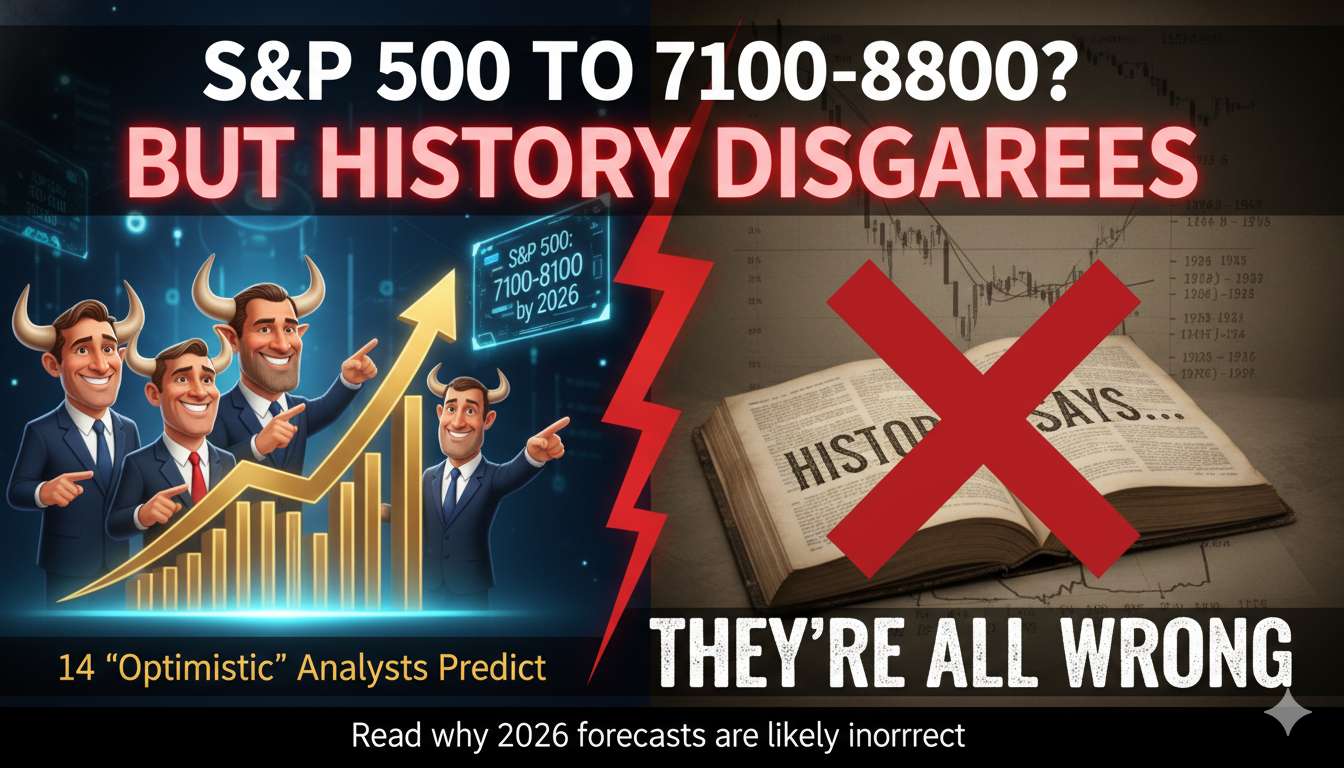
Wall Street analysts from major firms like Bank of America, Oppenheimer, and Goldman Sachs project the S&P 500 to reach between 7,100 and 8,100 by year-end 2026, implying gains of 2% to 17% from current levels around 6,930. However, past data reveals these forecasts often miss the mark, underestimating returns in 13 of the last 16 years with an average accuracy below 50%.
Analysts Project Strong Gains Amid Economic Uncertainties
Major investment banks have rolled out their projections for the S&P 500 in 2026, with estimates clustering in a range that signals continued optimism for U.S. equities. Bank of America leads the cautious end at 7,100, citing potential slowdowns in AI-driven spending and broader economic headwinds. On the bullish side, Oppenheimer stands out with an 8,100 target, betting on sustained tech sector momentum and corporate earnings growth.
Other notable forecasts include JPMorgan at 7,500, Goldman Sachs at 7,600, Morgan Stanley at 7,800, and Deutsche Bank at 8,000. These targets reflect expectations of earnings per share rising to about $306, a 12.5% increase from 2025 estimates, fueled by sectors like technology and finance. Analysts point to factors such as moderating inflation, potential Federal Reserve rate cuts, and robust consumer spending as key drivers.
Yet, these predictions come with inherent risks. Geopolitical tensions, supply chain disruptions, and shifts in monetary policy could derail the upward trajectory. For instance, if inflation reaccelerates, higher interest rates might pressure valuations, particularly in growth-oriented stocks that have dominated recent rallies.
Historical Patterns Cast Doubt on Forecast Reliability
Examining past performance, Wall Street’s track record in predicting year-end S&P 500 levels is far from stellar. Over the past 25 years, strategists have frequently underestimated market gains, missing targets by wide margins in volatile periods. In 13 out of the last 16 years, actual returns exceeded projections, with an average deviation of over 10 percentage points.
This pattern stems from the market’s inherent unpredictability. Annual returns for the S&P 500 have a standard deviation of nearly 20%, meaning outcomes can swing dramatically from expectations. For example, unforeseen events like pandemics or financial crises have repeatedly upended consensus views, leading to revisions mid-year.
Moreover, when analyst consensus narrows to a bullish outlook, as seen now with all targets above current levels, it often signals over-optimism. Bottom-up aggregates from individual stock targets imply a median of around 7,968, but real-world results rarely align precisely. Earnings growth forecasts, central to these models, have been overly rosy in the past, with actual figures falling short by 5-7% on average.
Market Dynamics That Could Prove Predictions Wrong
Current market conditions add layers of complexity. The S&P 500’s price-to-earnings ratio hovers near 25, above historical averages, suggesting limited room for multiple expansion. If corporate profits grow at the projected 15%, driven by AI investments and efficiency gains, the index could indeed climb. However, sectors outside tech, such as industrials and consumer goods, show signs of softening demand.
Investor sentiment plays a crucial role too. High valuations attract scrutiny, and any pullback in mega-cap stocks could cascade across the index. Analysts acknowledge risks like trade tariffs or regulatory changes impacting global operations, yet their models often fail to fully account for black swan events.
In essence, while the consensus points to moderate upside, the market’s history of defying expectations underscores the folly of relying solely on these forecasts. Savvy investors monitor leading indicators like employment data and manufacturing indexes to gauge real-time shifts.
Disclaimer: This article is for informational purposes only and does not constitute financial advice, investment recommendations, or endorsements. All information is based on publicly available reports and analyses. Readers should conduct their own research and consult professionals before making decisions.