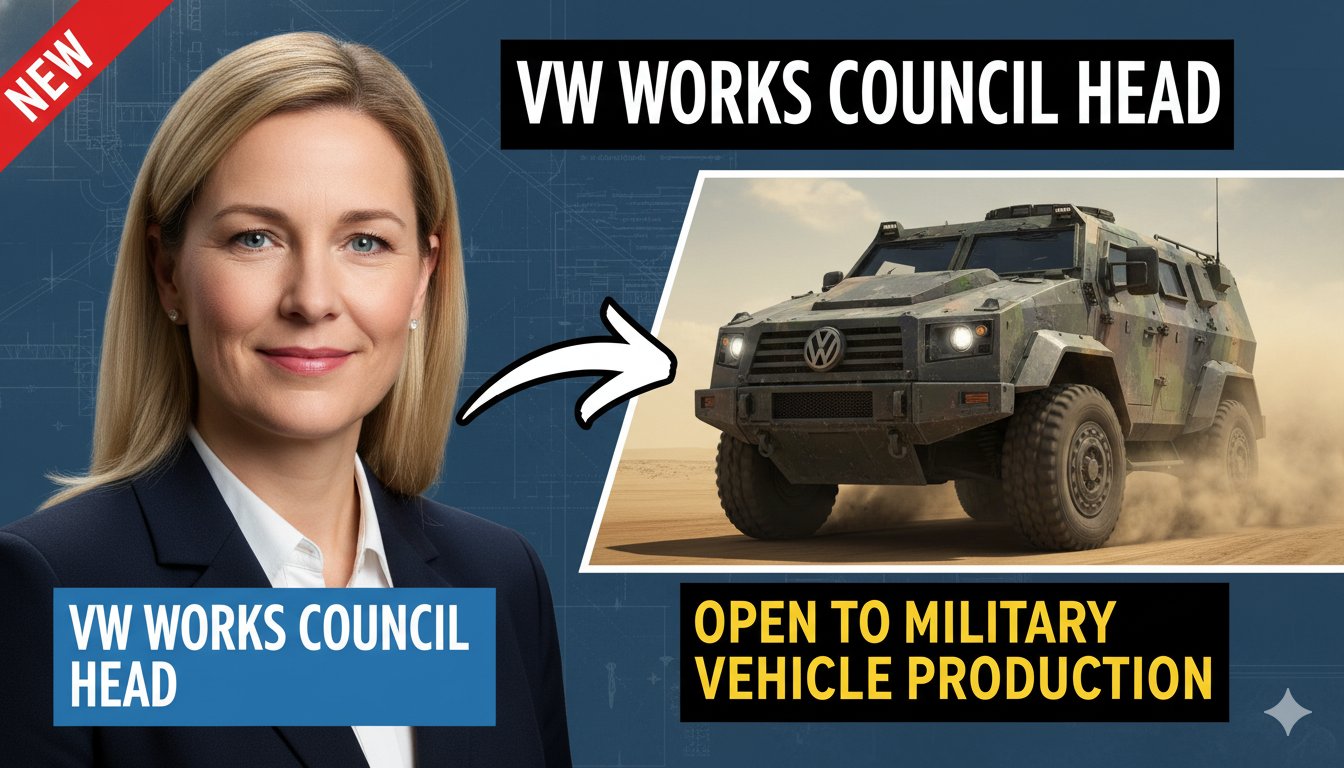
“Volkswagen’s powerful works council, led by Chairwoman Daniela Cavallo, has expressed readiness for the company to engage in defense-related projects, including potential military vehicle production. This stance comes as the automaker explores repurposing underutilized facilities like the Osnabrück plant, amid broader European rearmament efforts, job security concerns, and restructuring pressures in the automotive sector.”
Volkswagen Weighs Defense Opportunities as Works Council Embraces Strategic Pivot
The head of Volkswagen’s works council, Daniela Cavallo, has publicly indicated a willingness for the German automaker to participate in defense initiatives, including the production of military vehicles. This position reflects a pragmatic response to ongoing challenges facing the company, particularly the need to secure jobs and utilize production capacity in a changing geopolitical and economic landscape.
Cavallo emphasized that Germany and Europe must strengthen their defense capabilities in response to heightened global tensions. She framed the potential involvement not as a departure from Volkswagen’s core automotive identity but as a viable option to safeguard employment and leverage existing industrial expertise. This openness aligns with recent developments at the company’s Osnabrück facility, where prototypes for military-grade vehicles have been developed and showcased.
The Osnabrück plant, which currently produces models like the T-Roc Cabriolet, faces uncertainty following the planned end of that production run around 2027. With approximately 2,300 employees at the site, Volkswagen has been actively seeking alternatives to outright closure or sale. In recent months, the facility developed concepts based on existing platforms, including an olive-green military variant of the Amarok pickup truck (designated MV.1) and a ruggedized Crafter van (MV.2). These prototypes were presented at the Enforce Tac defense trade fair to assess market interest and potential opportunities.
Volkswagen’s spokesperson confirmed that these efforts were exploratory, aimed at identifying viable paths forward for the site. While no final decisions have been made, the move underscores a broader strategy to diversify beyond traditional passenger cars amid sluggish electric vehicle demand in key markets and intensifying competition.
This consideration of defense work is set against Volkswagen’s wider restructuring efforts. The company has been implementing cost reductions and workforce adjustments to address profitability pressures. Earlier agreements with labor representatives included significant job reductions at the core VW brand, though protections and negotiations continue to evolve. The works council’s supportive tone on defense projects highlights a focus on preserving industrial jobs in Germany by tapping into growing demand for military equipment.
Europe’s push for increased defense spending has created opportunities for traditional manufacturers to pivot. Heightened security concerns, including ongoing conflicts and alliance commitments, have driven demand for vehicles suited to logistical, transport, and specialized military roles. Automakers with robust engineering and production capabilities are well-positioned to adapt existing platforms for such uses, potentially at lower costs through scaled manufacturing.
Volkswagen already has ties to the defense sector through subsidiaries. For instance, MAN Truck & Bus, part of the VW Group, supplies chassis and components used in military applications. Additionally, the group’s Renk division provides specialized gearboxes for armored vehicles, including main battle tanks. These existing connections could facilitate smoother entry into expanded military production if pursued.
The works council’s position carries weight in Volkswagen’s decision-making process. In Germany’s co-determination model, employee representatives play a key role in strategic discussions, particularly those affecting jobs and plant futures. Cavallo’s comments suggest labor leaders see defense involvement as a means to mitigate risks from automotive market volatility, including supply chain disruptions, regulatory shifts toward electrification, and regional economic pressures.
Exploratory steps, such as prototype development and trade fair participation, indicate Volkswagen is testing the waters without committing fully. Discussions with defense firms, including past engagements with companies like Rheinmetall, have occurred, though no partnerships have been finalized for the Osnabrück site.
If Volkswagen proceeds with military vehicle production, it could involve adapting commercial models for durability, off-road performance, and specialized configurations. The Amarok-based MV.1 and Crafter-based MV.2 demonstrate how existing architectures can be militarized relatively quickly, offering transport, command, or utility functions.
This potential shift would place Volkswagen among other European automakers evaluating similar opportunities. The automotive industry’s excess capacity and skilled workforce make it an attractive partner for defense needs, especially as governments prioritize domestic production for security reasons.
For Volkswagen, the calculus involves balancing brand image, shareholder expectations, and labor priorities. While passenger vehicles remain the core business, strategic diversification into defense could provide stability amid uncertain automotive demand.
Key Developments at a Glance:
Works council chair Daniela Cavallo expresses openness to defense projects for job security and European defense needs.
Osnabrück plant develops and showcases military prototypes (MV.1 Amarok-based, MV.2 Crafter-based) at Enforce Tac fair.
Site employs ~2,300; T-Roc Cabriolet production ends ~2027, prompting repurposing efforts.
Broader VW restructuring includes cost cuts and job adjustments amid profitability challenges.
Group subsidiaries (MAN, Renk) already supply defense-related components.
Disclaimer: This is a news report based on current developments in the automotive and defense sectors. It does not constitute financial, investment, or legal advice.